
Welcome to W(h)ither the University?
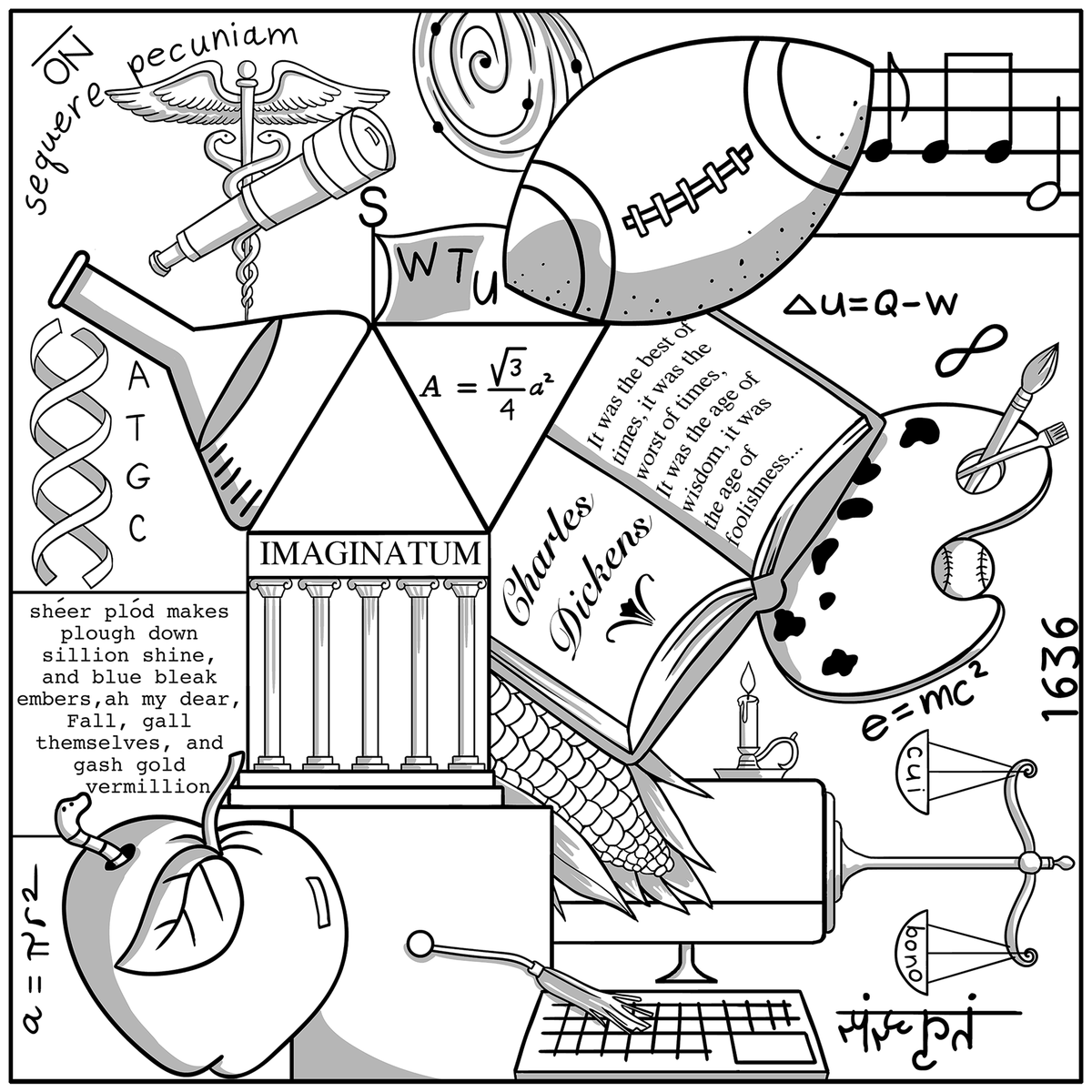
W(h)ither the University? is a discussion-based prompt for examining the state of university health and independence and thinking about possibilities for change. Its focus on complex research universities is simply because they are, rightly or wrongly, the model to which most other higher education institutions look, and often strive to emulate.
The perspective is institution-level. Everything, and I mean everything, is about organization. At the institution level, organization comprises four things: strategy, structure, leadership, and integrity. But it comes down to one over-arching behavior: choice-making. It is the choices, or decisions, that define the path of an institution, and that establishes its culture. Not just the decisions themselves, but the quality of the decision-making process, and its short- and long-term outcomes.
W(h)ither theUniversity? views organization as the secret of superior performance, the key to untouchability, the recipe for creativity, effectiveness, and efficiency in all its day-to-day functions. It is also the root cause of organizational failure, with far-reaching consequences. Most non-natural disasters have been attributed to organizational choice-making, and even the effects of some natural ones, from the Titanic to the Challenger to the 2008 financial crisis to Katrina. Companies have collapsed or paid dearly for the choices they have made.
At the moment, universities find themselves in a crisis of epic proportions, their own disaster scenario. Is it their own version of organizational failure? And if so, of what kind? A dispassionate examination and greater understanding of how things have gotten to this point can contribute to forging a stronger future.
Looking back does not require finger pointing, certainly not demonizing; that is a waste of valuable time. Rather, it serves as a form of enlightenment. I’ve said before that there’s no such thing as unintended consequences—an excuse of young children (“I didn’t mean for that to happen!”)—and that it’s adult counterpart, unanticipated consequences (“No one could have predicted …”), is a myth. Consequences are simply discounted, rationalized away, or as Robert Merton said, “explicitly ignored” —but they are invariably raised. Confrontation is the best way: anticipating and finding ways to deal with possible negative consequences arising outside the organization’s purview independent of immediate self-interest—to prevent or hedge them —is one of the things that separates success from eventual failure or crisis in institutions.
The good news in all this is that organizational decisions, or choices, are under human control. Different choices can be made. Institutions can be restructured, mission remembered and strategy enacted and aligned, decision-makers replaced, decision-making improved, risks understood and accounted for, integrity restored, culture (albeit with time and a little pain) changed.
Change takes determination, honesty, organizational skill, and imagination. I’m here for the imagination part. To offer and discuss every organizational strand and idea, so that you can use it to decide on their potential or throw-out factors (don’t be too hasty); so that every single objection can be raised, researched, analyzed, and eliminated or diversified away; so that you can make new, reasoned choices for the future. And be protected from being thought crazy for suggesting something, which I’m happy to do for you.
I’m also here for the fun. Things are so bad for universities right now, that a little levity is needed, so I’ll try to provide that. I’ve always found universities to be a rich source of material.
From initial exploratory backgrounders, to deeper dives on specific questions of institutionalization and organization, welcome. Time for the big questions.