
A Timely Update On Academic Freedom
This case meaningfully adds to the discussion.
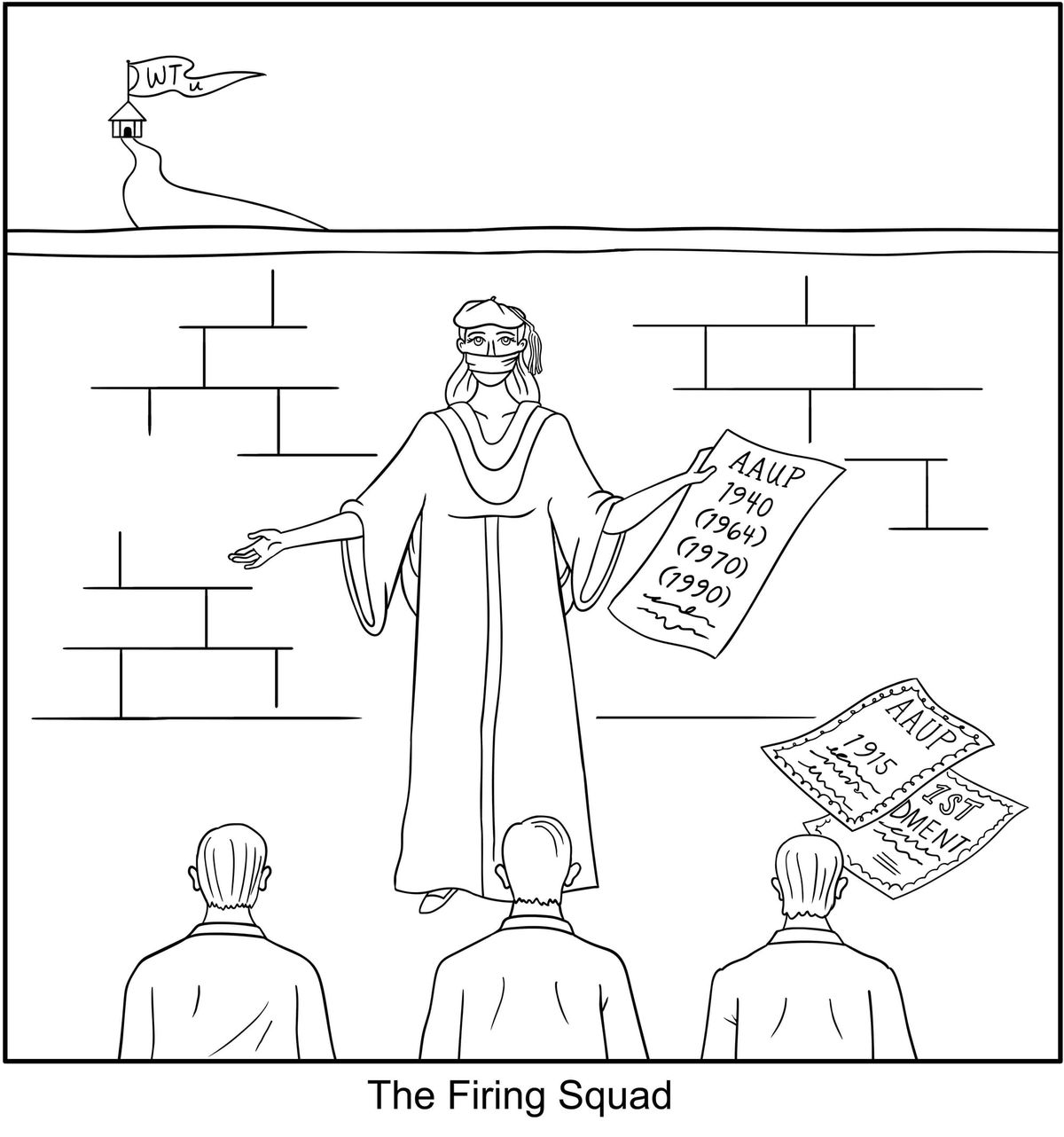
I do love reading court cases, and one has just appeared relevant to professors' academic freedom that is particularly interesting because it concerns the United States Military Academy at West Point, a federal institution. It cites classic cases briefly noted in my last post (Pickering, Keyishian, Garcetti) as well as several very recent cases dealing with federal oversight.
The plaintiff sought an injunction of a new Dean's Policy and Operating Memo and new Classroom Directive that constrained professors from publishing or speaking in their established area of expertise, and in general any use of their affiliation (e.g., saying where they were a professor) without prior permission, and to avoid expressing their professional opinion in class. This is even worse than it sounds, as it goes to the heart of a professor's freedom to choose his area of research or to, as discussed in the last post about instruction, present all considerations relevant to the subject at hand to students.
On this latter matter, New York District Court Judge Cathy Seibel was clearly incredulous at the defense's claims, in a nicely disdainful way:
"Further, no real justification for the Classroom Directive has been provided. And it is nonsensical if the mission is to prepare the nation’s future military officers. For genuine strength and leadership to result, cadets must be exposed to a variety of viewpoints and trained to think critically about them. West Point cadets are already, by definition, smart, tough and patriotic. They are not snowflakes who will somehow be harmed by learning about controversial issues or competing viewpoints. They will not somehow be weakened in their future defense of our country if their classroom discussions are robust and open. The Supreme Court in Keyishian v. Board of Regents observed that “[t]he Nation’s future depends upon leaders trained through wide exposure to that robust exchange of ideas which discovers truth out of a multitude of tongues, rather than through any kind of authoritative selection.” 385 U.S. at 603. That case involved a civilian public university, but the principle is, if anything, even more important when it comes to our future military leaders."
The plaintiff's motion for preliminary injunction was granted, and the defense's motion to dismiss was denied. You can read the full case here.