
Whither Tenure?
The times they are a-changin'
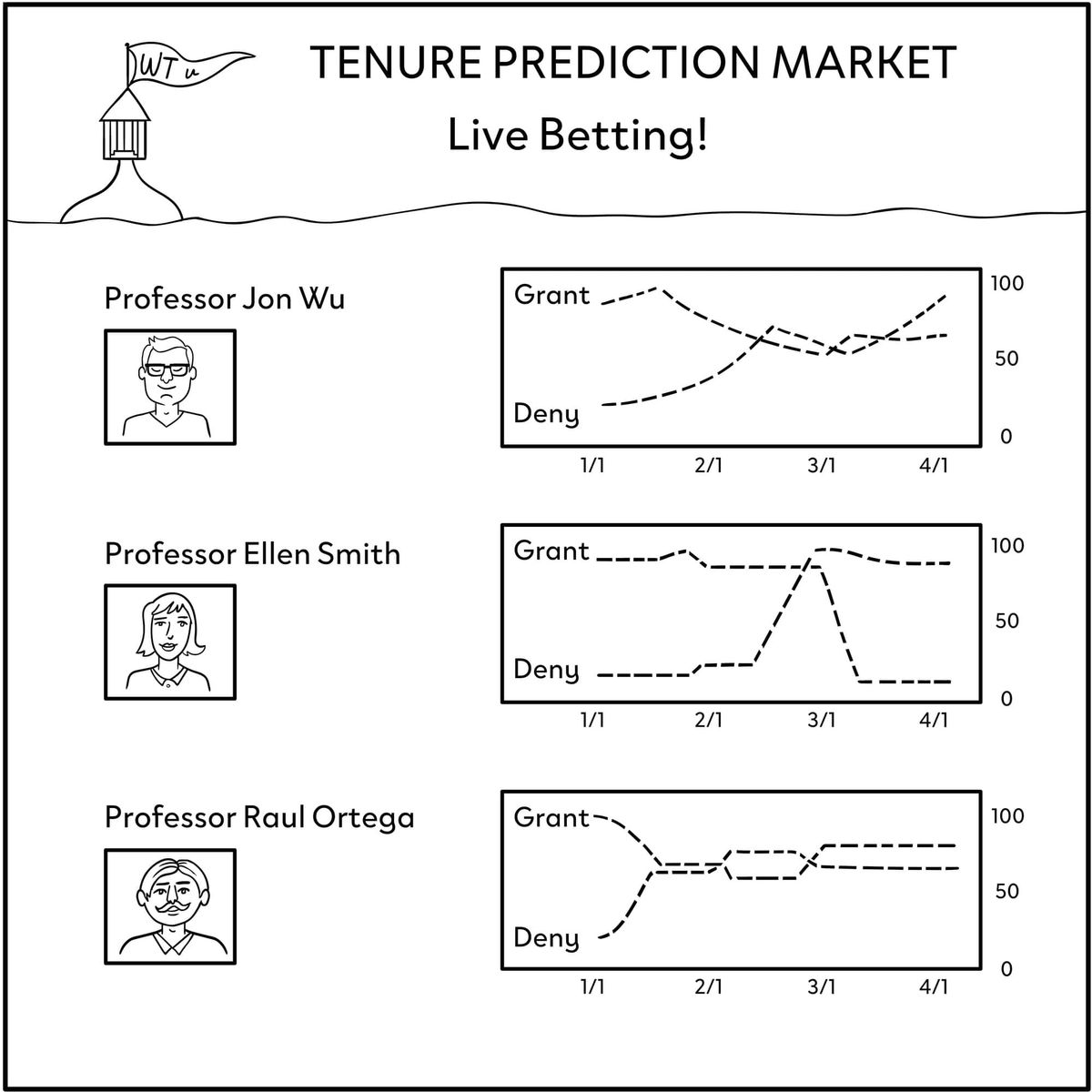
It will be interesting to see if history shows lifetime tenure to have been a blip in the long history of higher education. How big (or small) a blip? I could argue that its true strength was, effectively, a 30-year blip (roughly, 1940-1970) before it entered its downward trajectory, but circumstances held the worst off until the mid 1990s. So maybe a 55-year blip. What is not debatable is that tenure, under fire for more than two decades now, appears to be headed for elimination or a radical redesign that changes the nature of academic employment, with public institutions in conservative states being test cases. In some states the efforts to eliminate tenure have been irrationally, and I believe counterproductively, bundled in with efforts to control speech and curriculum, such that the banning of tenure looks like nothing so much as “cover” for attempts to suppress the rights to teach and learn, and an extension of the war against expertise where unqualified persons think they know, metaphorically, more than the generals. Tenure and speech must be analytically, and practically, separate. As an optimist, I can imagine changes to tenure that would make being a professor better for institutions, faculty, science, and students. Change is coming, so it is time to switch from denial, ungrounded fear-mongering about not being able to recruit, and insistence on the status quo, to reinvention and a focus on achieving what most matters. And that must be, first and foremost, academic freedom.
Before getting into details, I’ll start with an acknowledgment that academic tenure makes no sense to me. There are many reasons, but the principal one is that tenure as a policy feels so regressive, a kind of anachronism. Universities, ideally, should be the most dynamic and fluid of institutions, not the most static. Tenure on the face of it is restrictive.
While I don’t think tenure is necessary I do think academic freedom, including a formal recognition of academic authority, is. That is what should be guaranteed to all professors, contractually according to agreed-upon conditions not subject to the personal beliefs and objectives of a trustee or donor (often the same thing) or president, cowed or not. The rest is performance. And that may mean that, in practice, some people will end up having lifetime employment in academia. Just not formal tenure.
Below is a quick review of the rise of and threats to tenure as taken-for-granted policy (see the Notes at the end and the Library for sources); some questions about its underlying logic in the current environment; and some general conclusions in preparation for my next post that will return to the question of academic freedom.